
Scar-type led treatment planning
Acne Scar Treatment in Bhubaneswar
Individual assessment for active acne, post-acne marks and textural scars, followed by a staged treatment plan suited to the scar pattern and skin type.
Consultation first
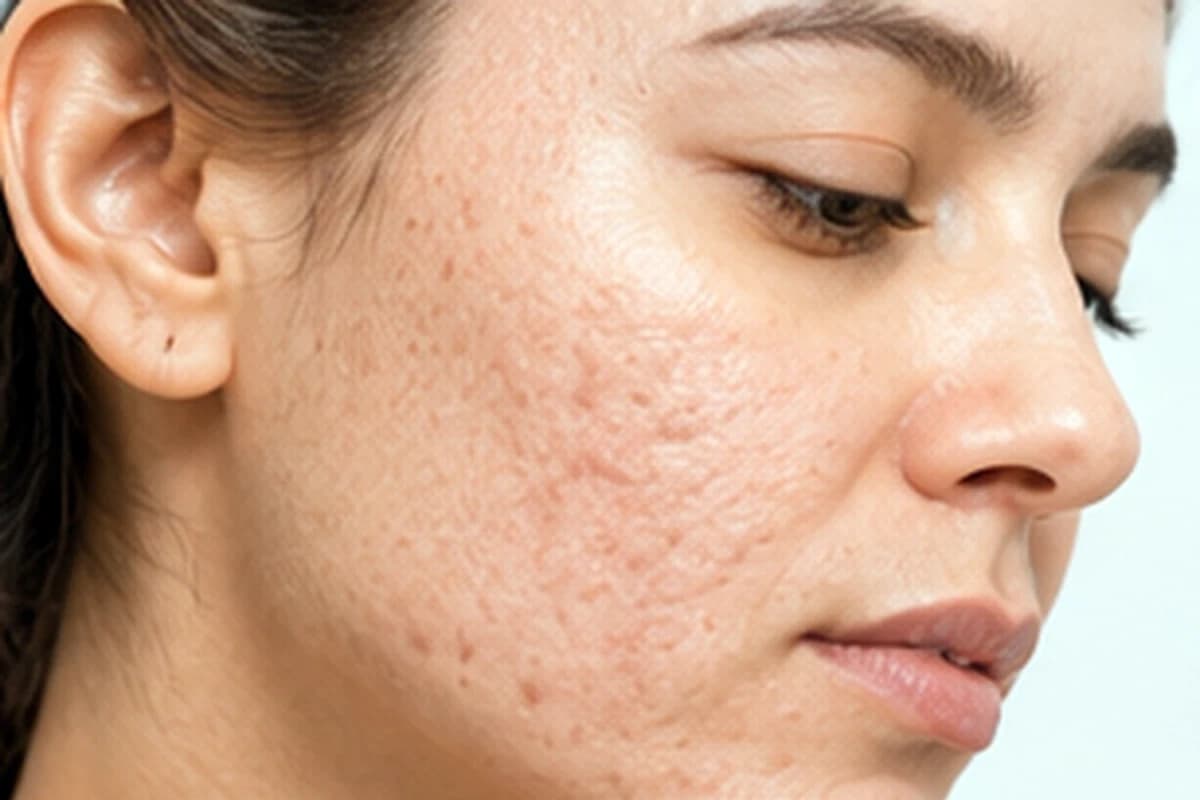
Acne marks and acne scars are different concerns and often need different treatment.
Flat red or brown marks can improve differently from indented or raised scars. Textural scars may also include several patterns on the same face, which is why a single procedure is not always the best approach.
Active acne is usually brought under control before intensive scar procedures. This reduces the risk of new scars developing while the existing texture is being treated.
Clinical assessment
How acne scars are assessed
The doctor examines scar depth, shape, location and skin response before discussing a combination or staged plan.
- Whether acne is active, controlled or recurring
- Ice-pick, rolling, boxcar, raised or mixed scar patterns
- Post-inflammatory redness or pigmentation
- Skin type, sensitivity and tendency to form dark marks
- Previous procedures, medication and healing response
- Acceptable downtime and realistic improvement goals
Doctor-led approach
Different scar layers may need different methods
Depending on the assessment, the plan may include resurfacing, microneedling-based treatment, radiofrequency, targeted techniques, peels or medical skin care. Recommendations are individualized.
Control active acne before scar revision
Match the procedure to scar morphology
Plan intensity around skin type and downtime
Review texture and pigmentation between stages
Clinical perspective from Dr. Satyarth Prakash
Doctor-authored guidance on assessment, treatment decisions and follow-up. Meet the doctor
Acne Marks and Acne Scars Are Not the Same Thing
This distinction is extremely important.
A post-acne mark primarily involves a change in colour.
A true acne scar involves a structural change in the skin.
For example, acne scarring may appear as:
- shallow depressions
- deeper pits
- rolling or uneven texture
- narrow deeper scars
- raised scars
- combinations of several scar patterns
A brown mark and a depressed acne scar may appear in the same area, but they are biologically different problems.
That means a product intended to improve pigmentation cannot necessarily correct a deep structural scar.
At the same time, someone whose main problem is pigmentation may not need an aggressive scar procedure.
This is why it is useful to determine whether the problem is primarily:
colour, structure, active acne—or a combination of all three.
Acne Scars Can Affect More Than Appearance
Acne scarring is sometimes dismissed as a purely cosmetic concern.
Research suggests that its effects can extend further.
A multinational study surveyed 723 adults with atrophic acne scars and found meaningful effects on self-consciousness, social behaviour and relationships. For example, 27.5% reported embarrassment or self-consciousness related to their scars, while 35.5% reported avoiding public appearances.[3]
These statistics should not be interpreted to mean that every person with acne scars will experience psychological distress.
They do show that the emotional impact can be substantial for some people.
A few scars may look medically minor to an observer.
For the person seeing them every morning, their significance may be very different.
Skin concerns should therefore be discussed without exaggerating them—but also without dismissing the person's experience.
Why Controlling Active Acne Matters Before Focusing Only on Scars
When someone begins noticing pits or scars, attention naturally shifts toward removing them.
But continuing active acne can create additional scars.
Modern acne guidelines therefore focus on controlling the underlying acne rather than treating only its aftermath.
Evidence-based acne management may include different topical or systemic options depending on factors such as severity, pattern, previous response, scarring risk and individual circumstances.
A 2024 evidence-based acne guideline includes treatments such as benzoyl peroxide and topical retinoids among strongly recommended options, while other therapies receive different levels of recommendation depending on the evidence and clinical situation.[4]
This does not mean that everyone with acne should start these medications themselves.
It means something more important:
Acne has established medical treatment approaches. Randomly changing products is not the same as following an appropriate treatment strategy.
Persistent, painful or scarring acne deserves particular attention because preventing future scars can be easier than correcting established structural scars later.
References for this clinical contribution
3. Tan J, Beissert S, Cook-Bolden F, et al. Evaluation of psychological well-being and social impact of atrophic acne scarring: A multinational, mixed-methods study. JAAD International. 2022;6:43–50. DOI: 10.1016/j.jdin.2021.11.006. PMID: 35005652.
4. Reynolds RV, Yeung H, Cheng CE, et al. Guidelines of care for the management of acne vulgaris. Journal of the American Academy of Dermatology. 2024;90(5):1006.e1–1006.e30. DOI: 10.1016/j.jaad.2023.12.017. PMID: 38300170.
Making an informed choice
How to choose an acne-scar clinic in Bhubaneswar
Acne-scar care is strongest when the clinic maps scar types and controls active acne before selecting procedures. Be cautious of a single-treatment promise for every scar pattern.
- Scar-type assessment
- The consultation should distinguish active acne, flat marks and ice-pick, boxcar, rolling or raised scars before treatment is discussed.
- Staged treatment options
- Mixed scar patterns may need different methods at different depths, with intensity planned around skin type and acceptable downtime.
- Realistic improvement goals
- A responsible clinic explains that complete scar removal cannot be guaranteed and documents progress under consistent conditions.
- Recovery and pigment-risk planning
- Aftercare, sun protection, temporary redness and the possibility of darkening should be discussed before a procedure begins.
What you can verify at Radiance Clinics
- Doctor-led acne and scar assessment
- Scar morphology guides procedure selection
- Consent-led skin improvement examples
- Review-based staged care in Nayapalli
What to expect
A clear path from assessment to follow-up.
- STEP 01
Scar mapping
The consultation identifies the dominant scar types and separates texture concerns from active acne and pigmentation.
- STEP 02
Staged sessions
Treatment may be sequenced so deeper scars, surface texture and marks can be addressed appropriately.
- STEP 03
Skin recovery
Aftercare, sun protection and review appointments help guide healing and the timing of the next stage.
Related care
Continue your research.
Acne scar revision
Read about staged treatment planning for scar texture.
Acne and acne scars
Understand common signs and related treatment pathways.
Skin improvement examples
View consent-led examples with individual-result context.
Active acne treatment
Understand why active breakouts are usually controlled before scar revision.
Treatment category overview
Compare relevant treatment pathways and concerns.
Related patient guide
Read practical guidance before choosing a treatment.
Relevant treatment results
Review consent-confirmed comparisons and realistic context.
Visiting from elsewhere in Odisha
Plan a visit to the verified Nayapalli, Bhubaneswar clinic.
Questions patients ask
Acne Scar Treatment FAQs
Complete removal cannot be guaranteed. Treatment aims to improve the visibility and texture of scars, with the degree of improvement depending on scar type, depth, skin response and the chosen plan.
There is no single best procedure for every scar. Rolling, boxcar, ice-pick and raised scars respond differently, and mixed patterns often need a combination or staged approach.
Usually, active breakouts should be controlled before intensive scar treatment so that new scars are less likely to form during the revision process.
Downtime varies by procedure and intensity. Redness, swelling, dryness or temporary darkening may occur. The clinic explains expected recovery and aftercare before treatment.
Discuss suitability with the doctor before choosing treatment.
Results, recovery and the number of sessions vary. A consultation is required to assess the concern and recommend an appropriate plan.