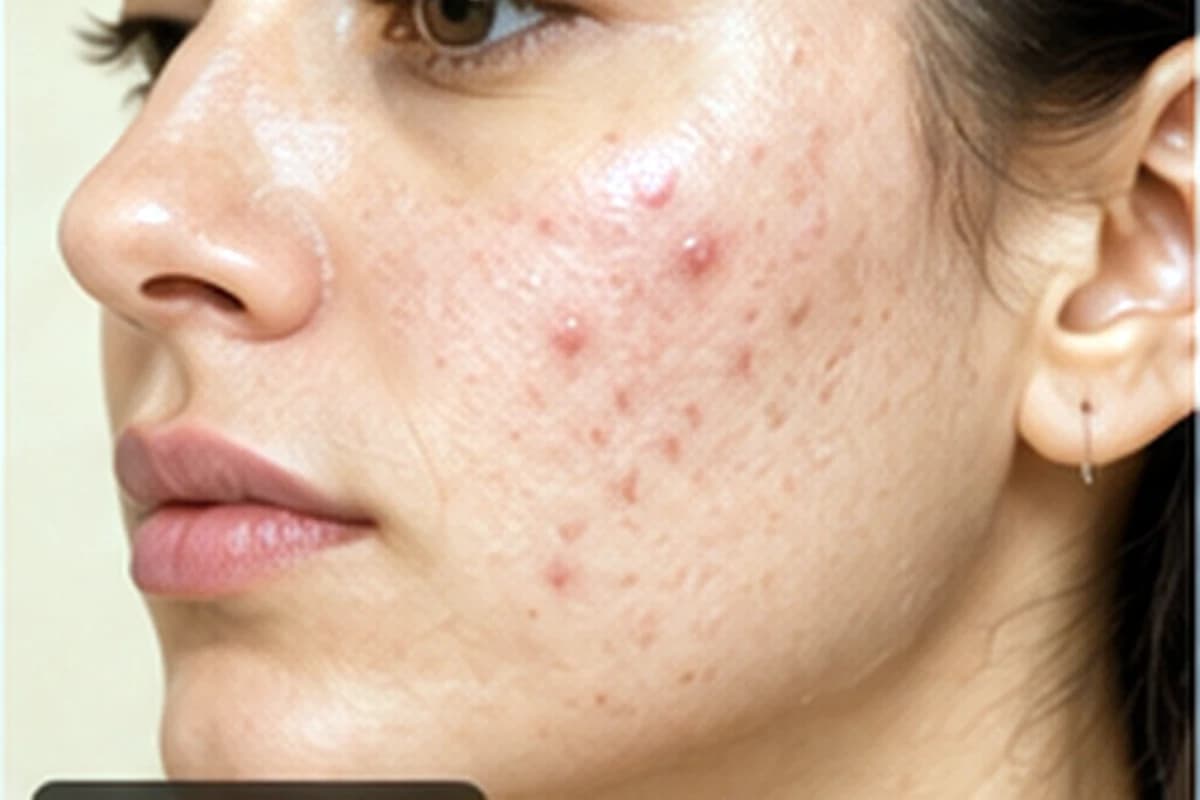
You try a new face wash, then a serum, followed by a cream someone recommended because it worked for them. For a few weeks, your skin may look better. Then another breakout appears while the marks from the previous one are still visible.
At that point, it is common to wonder:
Recurring acne can be frustrating, particularly when skincare products or previous treatments seem to provide only temporary improvement. But simply adding another product is not always the most useful next step.
Understanding can help make acne care more focused and manageable.
Acne Is Not the Same for Everyone
Two people can both say they have acne while experiencing very different problems.
One person may develop painful breakouts for the first time in their twenties. Another may have struggled with acne since school. Someone else may have relatively few active pimples but remain concerned about the marks or scars left behind.
Some people may also complete treatment successfully, only to find that their acne later returns.
These differences matter because acne care should take into account the individual's current skin concerns, treatment history, previous responses, priorities, and the effect acne has on everyday life.
For some people, acne may affect confidence in photographs or make getting ready more time-consuming because they are trying to cover marks. Others may feel frustrated after spending money on multiple products without knowing whether they are making meaningful progress.
The aim should therefore be to understand the , rather than assume that the same routine is suitable for everyone.
Previous Treatments Provide Useful Information
When acne persists or returns, knowing what has already been tried can provide important information.
Previous prescriptions, creams, cleansers, serums, oral medicines, and other products may help show what improved the acne, what caused problems, and what was difficult to continue.
Useful questions include:
- Did a previous treatment improve the acne?
- How long was it used?
- Did any product cause burning, peeling, dryness, redness, or irritation?
- Was the skincare routine too complicated or time-consuming to follow consistently?
- Were certain products or medicines difficult to afford?
- Why was a treatment stopped?
- What happened after treatment was stopped?
These details matter because the success of acne treatment depends not only on what is prescribed but also on whether a person can realistically continue using it.
A 2026 systematic review of acne-treatment adherence found that reported reasons for not continuing treatment included . [1]
The review included 26 eligible papers and found considerable variation in adherence. These findings highlight why practical issues such as cost, treatment tolerance, expectations, and perceived benefit should be considered when planning acne care. [1]
A treatment plan therefore needs to be not only medically appropriate but also .
Pimples, Marks, and Scars Are Different Concerns
The word “acne” is often used to describe everything visible on acne-prone skin, but these concerns are not necessarily the same problem.
For example, a person may have:
- Active pimples or inflammatory breakouts.
- Flat marks remaining after previous breakouts.
- Changes in skin texture.
- Acne scars.
- A combination of these concerns.
Identifying the main concern is important because different problems may require different approaches.
For one person, repeated painful breakouts may be the priority. For another, active acne may have improved considerably, but persistent marks remain the main concern. Someone else may be especially worried about the possibility of permanent scarring.
Clearly defining the problem helps clarify and makes progress easier to assess.
Recurring Acne Deserves Careful Review
When acne returns after treatment, it can feel as though all the previous effort has been wasted.
However, recurrence does not automatically mean that the previous treatment had no value. What happens after treatment can also be an important part of acne management.
A useful review of recurring acne should consider:
- What treatment was previously used.
- How long it was used.
- How consistently it was followed.
- How much improvement occurred.
- Whether side effects developed.
- Why treatment was stopped.
- How soon acne returned after stopping.
- What the skin looks like now.
The next step depends on both the current condition of the skin and the response to previous treatment.
Maintenance treatment may also be relevant in some circumstances.
Bettoli and colleagues studied patients with moderate-to-severe acne who had achieved remission after oral isotretinoin treatment. Their findings suggested that a maintenance regimen containing adapalene and benzoyl peroxide may help reduce recurrence in appropriately selected patients after successful treatment. [2]
This does mean that every person with recurring acne requires the same maintenance treatment. The study involved a specific treatment sequence and patient group.
Instead, it supports a broader point: acne management may sometimes need to include a discussion about what happens , rather than ending as soon as the skin becomes clearer.
Progress Should Be Clearly Defined
One of the difficult parts of acne treatment is uncertainty.
A single new spot can make it seem as though nothing is working, even when the overall pattern of acne may be improving.
It can therefore be useful to decide in advance what progress should look like.
Questions that may help include:
- Are fewer new spots developing?
- Are breakouts becoming less severe?
- Are painful or inflamed lesions occurring less often?
- Is the treatment comfortable enough to continue?
- Are side effects making the routine difficult?
- Is any part of the routine difficult to follow consistently?
- Has the main concern changed?
- Does the treatment need to be reviewed?
Looking at the overall pattern rather than one individual breakout can make progress easier to assess.
Treatment sometimes needs to be continued, simplified, adjusted, or reconsidered depending on the response and tolerability.
Cost Is Part of Treatment Planning
The cost of acne care can directly affect whether a routine is realistic over time.
Expenses may include:
- Prescription medicines.
- Cleansers and moisturisers.
- Sunscreen.
- Other skincare products.
- Follow-up consultations.
- Recommended procedures.
Understanding these costs before beginning a plan may reduce the chance of treatment being stopped unexpectedly because it becomes unaffordable.
Cost is not merely a convenience issue. The 2026 systematic review by Santer and colleagues identified cost as one of the reported reasons for acne-treatment nonadherence. [1]
A practical treatment plan should therefore fit not only the skin concern but also the person's available .
It should also be clear why each part of the routine has been recommended. Using several products without knowing what each one is supposed to achieve can make treatment more complicated than necessary.
Procedures Should Be Clearly Explained
Procedures may sometimes be considered for particular acne-related concerns, but the reason for recommending them should be clear.
Before proceeding, useful questions include:
- What exactly is the procedure intended to treat?
- Why is it being recommended for this particular concern?
- What level of improvement is realistic?
- How many sessions may be needed?
- What alternatives are available?
- What are the possible risks or side effects?
- Is recovery or downtime expected?
- What will the likely cost be?
- Will other acne treatment still be needed?
A procedure should ideally be considered after assessment of the skin and a discussion of what it can—and cannot—contribute to the overall care plan.
This is particularly important when active acne, marks, and scars exist together, because they may not all respond to the same intervention.
Concerns About Treatment Matter
People with acne often receive advice from friends, relatives, social media, advertisements, or online discussions.
They may be told to change their face wash, avoid certain foods, drink more water, use a particular serum, or simply stop worrying about their skin.
But previous experiences and individual concerns can strongly influence whether someone feels comfortable starting or continuing treatment.
Some people may:
- Worry about medicine-related side effects.
- Have experienced irritation from previous products.
- Be concerned about taking oral medicines.
- Find complicated routines difficult to maintain.
- Have limited time for skincare.
- Be worried about treatment costs.
- Feel tired of repeatedly changing products.
These concerns should be discussed rather than dismissed.
Research on acne-treatment adherence has identified factors such as side effects, cost, and perceived lack of effectiveness among the reasons people may stop or inconsistently use treatment. [1]
Understanding the reason behind a concern can help make the treatment plan more practical and understandable.
A Clear Acne Plan Should Be Understandable
Good acne care should involve more than receiving a long list of products or medicines.
A clear plan should help a person understand:
- is being treated.
- each treatment has been recommended.
- each treatment should be used.
- side effects or difficulties may occur.
- treatment may need to be followed before progress can be assessed.
- may be involved.
- progress should be reviewed.
- if the treatment causes problems or acne worsens.
Results vary between individuals, and treatment sometimes needs to be adjusted along the way.
Clear communication and realistic expectations can make it easier to understand whether progress is occurring and whether changes to the plan are needed.
You Do Not Have to Try Every Product
When acne keeps returning, repeatedly moving from one face wash, cream, serum, supplement, or online recommendation to another can make treatment increasingly confusing.
More products do not necessarily provide more useful information.
When acne persists, repeatedly returns, becomes difficult to manage, or leaves troublesome marks or scars, reviewing the may be more useful than simply adding another product.
That review can include:
- Previous prescriptions.
- Current skincare products.
- Past reactions or side effects.
- Treatments that helped.
- Treatments that did not help.
- What happened after treatment stopped.
- Current priorities.
- Concerns about medicines or procedures.
- Time and effort required by the routine.
- Treatment costs.
The goal is not to try everything.
The goal is to understand the problem clearly and follow a plan in which
References
Treatment adherence in acne vulgaris: systematic review and narrative synthesis. Skin Health and Disease. Published online July 31, 2026. doi:10.1093/skinhd/vzag084.
Maintenance therapy for acne vulgaris: efficacy of a 12-month treatment with adapalene-benzoyl peroxide after oral isotretinoin and a review of the literature. Dermatology. 2013;227(2):97–102. doi:10.1159/000350820.