
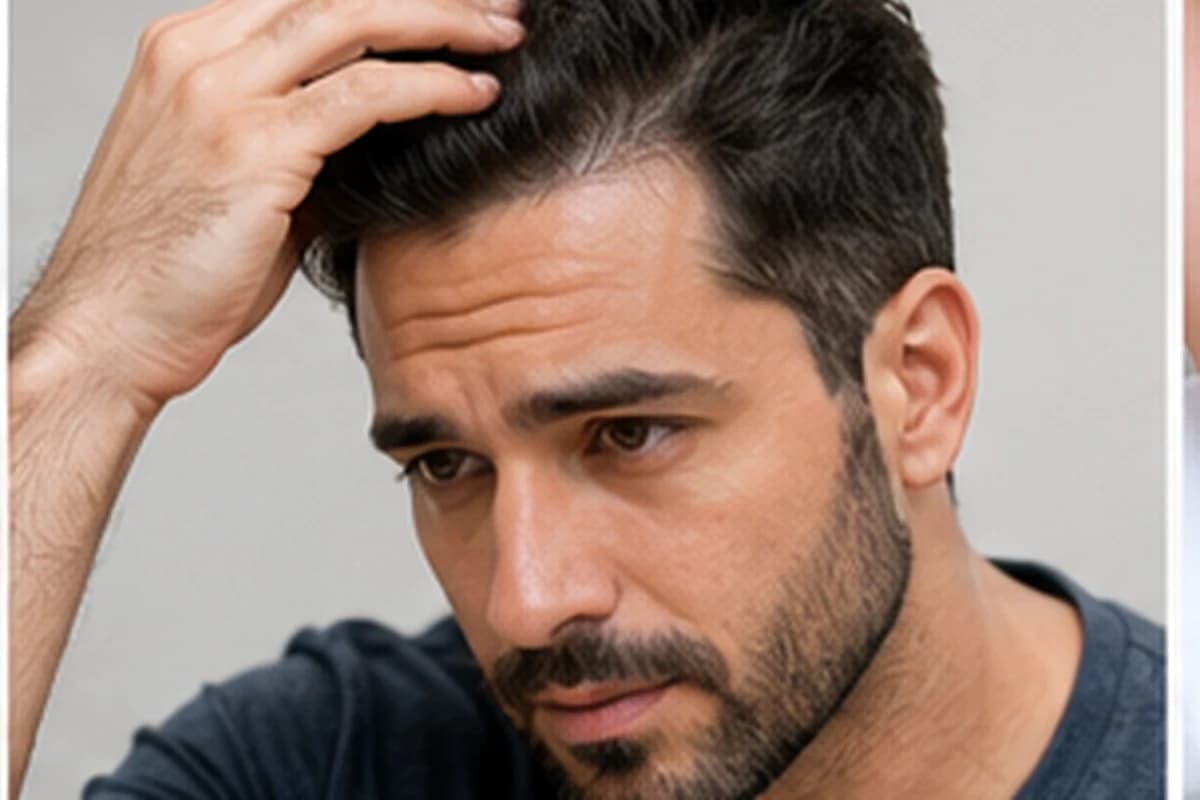
Vertex and crown restoration planning
Crown Hair Transplant in Bhubaneswar
Doctor-led planning for crown baldness and vertex thinning, balancing whorl direction, surface area, donor limits and future progression.
Consultation first
The crown can require substantial donor hair because of its surface area and changing direction.
Crown thinning develops around the vertex and natural whorl. The area may look compact from one angle but cover a broad curved surface, so an online graft calculator cannot reliably define the plan.
The consultation considers whether the crown is stable enough to treat, how much donor hair is safely available and whether frontal or mid-scalp restoration should take priority for the individual's visual goal.
Clinical assessment
What crown transplant planning evaluates
Crown work is planned around the pattern and donor budget, not around a fixed density claim.
- Diameter and progression of the vertex area
- Natural whorl centre and direction changes
- Existing miniaturised hair within the crown
- Frontal and mid-scalp restoration priorities
- Safe donor supply and hair characteristics
- Future expansion beyond the planned area
Doctor-led approach
Use the donor reserve where it creates the most useful coverage
The doctor discusses the trade-off between treating a broad crown and preserving grafts for other areas. Placement follows the whorl pattern, while density expectations remain tied to donor supply and hair characteristics.
Map the full vertex surface
Respect the natural whorl direction
Balance front and crown priorities
Reserve donor hair for future progression
Find the right starting point
What are you noticing?
Choose the closest concern to reach the relevant information. This is not a diagnosis; the doctor confirms the appropriate next step during consultation.
Evidence from Radiance
Real clinic evidence to support an informed decision.
Review consent-confirmed examples, doctor education and independent coverage in context. Images and reviews reflect individual experiences and do not guarantee another patient's result.

Consent-confirmed result example
Advanced Male Pattern Baldness
View the comparison and individual-results context.

Watch the doctor explain
Hair Transplant Graft Planning: Video Guide
This video discusses the factors that influence graft planning, including the planned area, donor supply, hair characteristics and long-term goals.
Crown and hairline graft-priority guide
Medically reviewed patient education from Radiance Clinics.
Dr. Satyarth Prakash
20+ of doctor-led clinical experience.
“Dr Satya Sir is very good, I did not feel any pain in my transplant, initially I was scared but Sir told me that there will not be any pain, it has been 2 years since my transplant, I am very happy.”
Umakanta Pradhan · Google review
In the media · Hindustan Bytes
Dr. Satyartha Prakash and the Evolution of Hair Transplantation in Odisha
View the verified publication record and original article link.
Why crown graft planning is different
The crown contains changing angles around a spiral pattern. Direction and spacing influence how the result reads from above, but attempting uniform high density across a large area can exceed a responsible donor plan.
The doctor may recommend staged priorities or medical preservation before surgery when the surrounding area is still changing. No graft number should be promised from a single photograph.
Recovery and growth expectations
Healing instructions are similar to other transplant areas, but the crown can appear different under overhead light and during early shedding. Growth develops gradually and final visual coverage varies.
Follow-up assesses healing, growth progression and continuing loss around the treated area. A transplant redistributes follicles; it does not stop untreated hair from thinning.
What to expect
A clear path from assessment to follow-up.
- STEP 01
Crown mapping
The doctor assesses the vertex area, whorl direction, miniaturised hair and other scalp priorities.
- STEP 02
Donor allocation
Coverage goals are balanced against the safe donor reserve and possible future treatment needs.
- STEP 03
Growth review
Recovery and gradual growth are reviewed without promising a fixed density or universal timeline.
Related care
Continue your research.
Hair transplant in Bhubaneswar
Review the complete donor and procedure planning pathway.
Male pattern hair loss treatment
Understand crown progression and preservation options.
Doctor video: graft planning
See why a graft estimate follows examination rather than a photograph.
Hair restoration planning guide
Compare area priorities, donor supply and long-term planning.
Treatment category overview
Compare relevant treatment pathways and concerns.
Related patient guide
Read practical guidance before choosing a treatment.
Related patient guide
Read practical guidance before choosing a treatment.
Related patient guide
Read practical guidance before choosing a treatment.
Related patient guide
Read practical guidance before choosing a treatment.
Related patient guide
Read practical guidance before choosing a treatment.
Related patient guide
Read practical guidance before choosing a treatment.
Related patient guide
Read practical guidance before choosing a treatment.
Relevant treatment results
Review consent-confirmed comparisons and realistic context.
Visiting from elsewhere in Odisha
Plan a visit to the verified Nayapalli, Bhubaneswar clinic.
Questions patients ask
Crown Hair Transplant FAQs
It can require substantial grafts because the vertex may cover a broad area and has a whorl pattern. The actual estimate depends on measured area, donor supply and priorities.
There is no universal answer. Visual priority, donor supply, pattern stability and future loss determine how areas are sequenced.
No. Visual coverage depends on donor supply, hair calibre, colour contrast, area and individual growth. The consultation should set realistic limits.
Yes. Existing non-transplanted hair may continue to thin, which is why progression and preservation are discussed before and after surgery.
Discuss suitability with the doctor before choosing treatment.
Results, recovery and the number of sessions vary. A consultation is required to assess the concern and recommend an appropriate plan.