
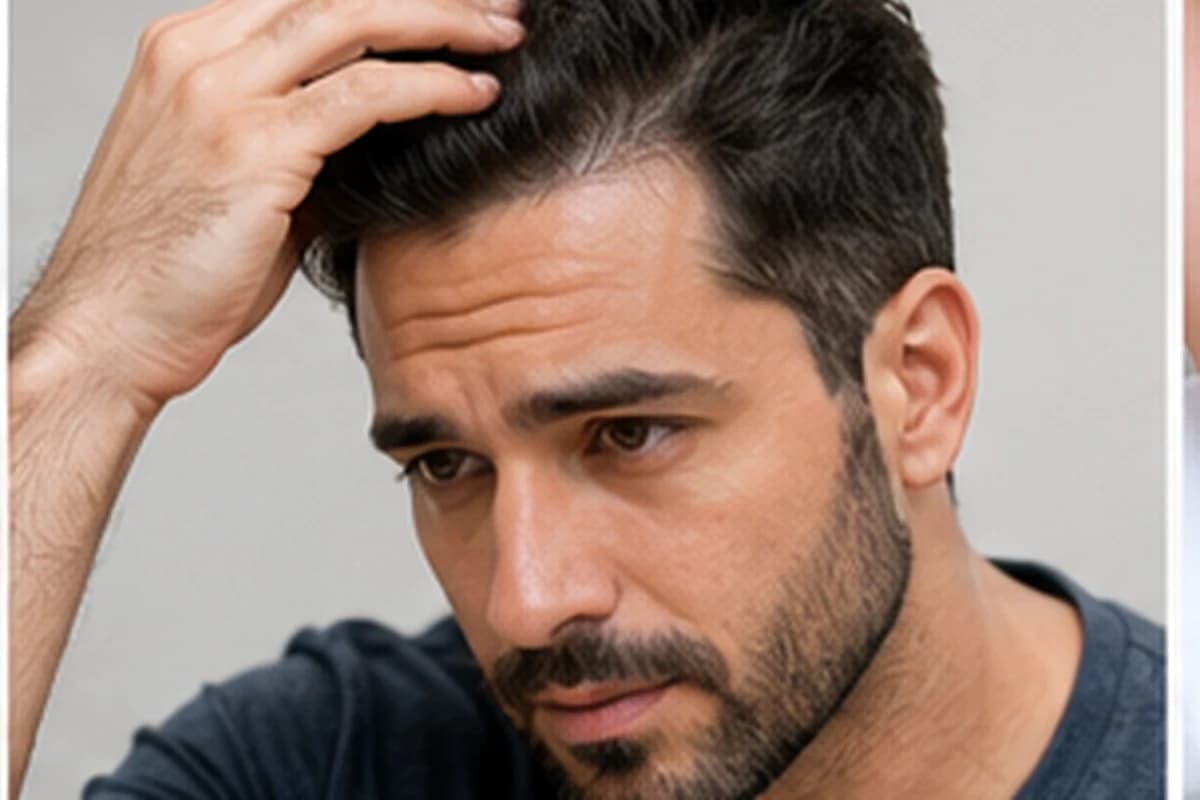
Assessment after a previous transplant
Hair Transplant Repair in Bhubaneswar
A detailed review of the hairline, recipient area, scarring and remaining donor reserve before any corrective pathway is discussed.
Consultation first
Repair planning begins with what remains possible, not with a promise to undo every problem.
Concerns after a previous transplant may include an unnatural or low hairline, visible plugs, poor direction, low density, scarring, uneven distribution or an overharvested donor area. Different problems require different corrective strategies.
The original graft placement, scalp condition and remaining donor reserve can limit what is achievable. A careful assessment may support staged repair, camouflage, selective removal or a non-surgical alternative, but further surgery is not always advisable.
Clinical assessment
What is checked before repair is considered
The consultation documents the recipient and donor areas and identifies which concerns may be improved without creating a larger problem.
- Hairline height, shape, direction and graft spacing
- Density distribution and visible plug-like placement
- Recipient scarring and scalp condition
- Donor depletion, scarring and remaining safe supply
- Previous technique, dates and available records
- Current progressive loss outside the transplanted area
Doctor-led approach
Correct selectively and protect the remaining donor area
Repair may involve more than adding grafts. The doctor weighs camouflage, redistribution, removal, scar management or non-surgical coverage against the limits created by previous surgery.
Identify the main visible problem
Measure remaining donor options
Discuss staged or non-surgical alternatives
Set limits before any procedure
Find the right starting point
What are you noticing?
Choose the closest concern to reach the relevant information. This is not a diagnosis; the doctor confirms the appropriate next step during consultation.
Evidence from Radiance
Real clinic evidence to support an informed decision.
Review consent-confirmed examples, doctor education and independent coverage in context. Images and reviews reflect individual experiences and do not guarantee another patient's result.
FUE and FUT donor-planning guide
Medically reviewed patient education from Radiance Clinics.
Dr. Satyarth Prakash
20+ of doctor-led clinical experience.
“Dr Satya Sir is very good, I did not feel any pain in my transplant, initially I was scared but Sir told me that there will not be any pain, it has been 2 years since my transplant, I am very happy.”
Umakanta Pradhan · Google review
In the media · Hindustan Bytes
Dr. Satyartha Prakash and the Evolution of Hair Transplantation in Odisha
View the verified publication record and original article link.
Problems that may need different repair strategies
A pluggy frontal line may need softening or selective graft management, while low density may require careful redistribution if donor hair remains. Poor direction and scarring can limit simple camouflage.
An overharvested donor area cannot be assumed to support another large session. Body hair or another source should not be promised without examination of suitability and likely visual benefit.
When a non-surgical pathway may be safer
If donor supply is severely limited or scarring makes further surgery unpredictable, a hair system, styling strategy or another camouflage approach may be more realistic. The consultation should explain the trade-offs clearly.
Bring operative notes, graft estimates, photographs and treatment dates when available. These records help the doctor understand what was done, but the current examination remains decisive.
What to expect
A clear path from assessment to follow-up.
- STEP 01
Previous work review
The doctor examines recipient placement, donor changes, scars and current progression.
- STEP 02
Feasibility discussion
Corrective, staged and non-surgical options are compared with clear limitations.
- STEP 03
Conservative plan
Any procedure is designed around remaining donor safety rather than a guaranteed correction.
Related care
Continue your research.
Hair transplant planning
Review the clinic's donor-first planning principles.
Non-surgical hair replacement
Consider cosmetic coverage when further surgery is unsuitable.
Doctor video: hair transplant safety
Review the suitability and donor questions that matter before surgery.
Hair transplant with a weak donor area
Read the doctor answer on donor limitations.
Treatment category overview
Compare relevant treatment pathways and concerns.
Related patient guide
Read practical guidance before choosing a treatment.
Related patient guide
Read practical guidance before choosing a treatment.
Related patient guide
Read practical guidance before choosing a treatment.
Related patient guide
Read practical guidance before choosing a treatment.
Related patient guide
Read practical guidance before choosing a treatment.
Related patient guide
Read practical guidance before choosing a treatment.
Related patient guide
Read practical guidance before choosing a treatment.
Related patient guide
Read practical guidance before choosing a treatment.
Relevant treatment results
Review consent-confirmed comparisons and realistic context.
Visiting from elsewhere in Odisha
Plan a visit to the verified Nayapalli, Bhubaneswar clinic.
Questions patients ask
Hair Transplant Repair Consultation FAQs
No. Repair depends on the specific problem, scarring, remaining donor supply, scalp condition and realistic goals. Further surgery can sometimes be unsuitable.
Sometimes additional grafts may help, but only if the donor area and recipient scalp can support them. Low density can also reflect progression outside the transplanted area.
Selected hairlines may be improved through camouflage or other corrective planning, but direction, scar tissue and available donor hair affect what is possible.
Bring previous photographs, procedure dates, operative records, graft estimates and current medicines if available. Do not delay consultation if records cannot be obtained.
Discuss suitability with the doctor before choosing treatment.
Results, recovery and the number of sessions vary. A consultation is required to assess the concern and recommend an appropriate plan.