What are the Common Causes of Hair Loss in Women?
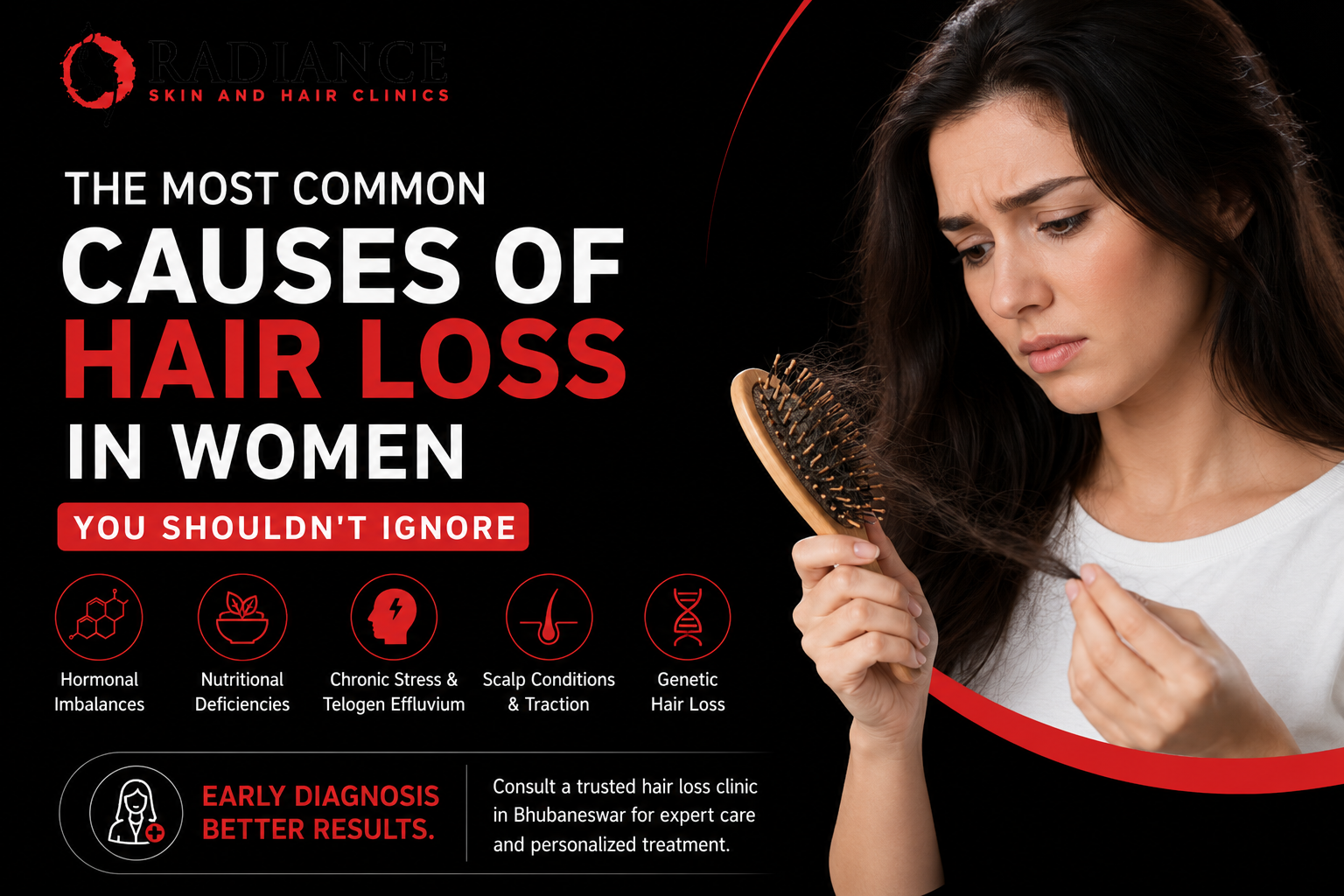
The Most Common Causes of Hair Loss in Women You Shouldn’t Ignore
Losing a few strands of hair every day is completely normal. But when clumps start appearing on your pillow, in the shower drain, or on your hairbrush, something more serious may be happening beneath the surface. Hair loss in women is far more common than most people realize and far more treatable when caught early. Understanding the causes is the first step toward getting your confidence and your hair back.
Hormonal Imbalances
One of the leading triggers of female hair loss is hormonal fluctuation. Conditions like polycystic ovary syndrome (PCOS), thyroid disorders, and the hormonal shifts that follow pregnancy or menopause can all disrupt the hair growth cycle. When estrogen levels drop, or androgens rise, hair follicles begin to shrink, leading to thinning across the scalp rather than a single bald patch.
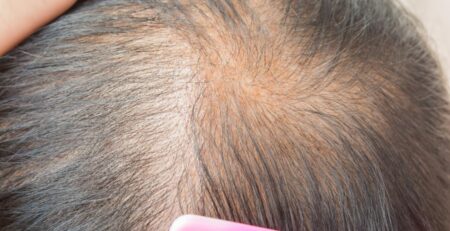
If you’ve noticed gradual thinning along your part line or the crown of your head, a hormonal imbalance could be the root cause — and it’s worth getting checked.
Nutritional Deficiencies
Hair needs fuel to grow. Iron, biotin, zinc, vitamin D, and protein are all essential for healthy follicle function. Women who follow restrictive diets, experience heavy menstrual cycles, or have absorption issues are particularly vulnerable to deficiencies that show up first as excessive shedding.
The frustrating part is that nutritional hair loss doesn’t happen overnight. By the time you notice the thinning, the deficiency has often been building for months. A simple blood panel can identify the gap and guide a targeted treatment plan.
Chronic Stress and Telogen Effluvium
Severe emotional or physical stress — illness, surgery, a major life event — can push large numbers of hair follicles into a resting phase simultaneously. This condition, known as telogen effluvium, typically causes noticeable shedding two to three months after the triggering event, which makes it easy to overlook the connection.
The good news is that telogen effluvium is usually temporary. With the right support and stress management, most women see significant regrowth within six months.
Scalp Conditions and Traction
Fungal infections, seborrheic dermatitis, and prolonged tension from tight hairstyles — braids, ponytails, and extensions — can damage follicles over time. Traction alopecia, caused by repeated pulling, is increasingly common and entirely preventable with early awareness.
Genetic Hair Loss
Female-pattern hair loss, or androgenetic alopecia, is hereditary and affects millions of women worldwide. Unlike male-pattern baldness, it tends to cause diffuse thinning across the top of the scalp rather than a receding hairline. Genetics don’t have to mean permanent loss — early intervention significantly improves outcomes.
When to Seek Professional Help
Many women wait too long before consulting a specialist, hoping the shedding will stop on its own. But the earlier hair loss is addressed, the better the results. If you’re in Odisha and noticing persistent thinning or shedding, visiting a reputable hair loss clinic in Bhubaneswar can make a decisive difference. Specialists can diagnose the exact cause through scalp analysis and blood work, and then create a treatment plan tailored to your specific condition.
Don’t normalize what your hair is trying to tell you. Consulting Radiance Skin & Hair Clinics a trusted hair loss clinic in Bhubaneswar puts you on the path toward real, lasting results.